Navigating Autodata’s Wiring Diagrams: Comprehensive Guide for Efficient Diagnostics
Introduction
Every automotive mechanic, technician, or enthusiast has encountered complex electrical issues that leave them scratching their head. In modern automobiles, electrical systems have become increasingly sophisticated, involving intricate wiring harnesses, multiple ECU modules, and advanced sensor arrays. Without clear and accurate guidance, diagnosing an electrical fault can turn into a costly, frustrating, and time-consuming puzzle. This is where an autodata wiring diagram becomes indispensable for automotive repair and diagnostic work.
Whether you're exploring a problematic CAN bus signal, troubleshooting intermittent sensor faults, or simply tracing simple lighting issues, having reliable, accurate, and user-friendly wiring schematics is essential. At AutoFixData.com, we understand the automotive technician's need to access trusted diagnostic tools. With integrated diagnostic platforms like Autodata, AllData, and HaynesPro, mechanics can quickly decode complex electrical systems and pinpoint faults, ensuring accurate diagnostics and efficient repairs.
This comprehensive guide will show how to effectively navigate an autodata wiring diagram, simplify your workflow, prevent costly errors, and substantially enhance your diagnostic efficiency.
Problem Identification
Automotive mechanics face increasing challenges due to modern automotive electrical wiring complexities. Research indicates that electrical faults are among the top five reasons vehicles return to repair shops multiple times after initial fixes. Today's vehicles incorporate extensive and interconnected electronics, sensors, network modules (like CAN, LIN, MOST, and FlexRay), adaptive cruise control systems, advanced driver-assistance systems (ADAS), and hybrid or electric propulsion systems—each with independent yet interconnected wiring systems.
In understanding why wiring diagrams are essential, consider these common electrical diagnostic challenges mechanics face:
- Tracing Intermittent Faults: Intermittent electrical problems can be particularly challenging because they often defy replication in the workshop and are difficult to isolate without precise documentation.
- Complex Multi-Module Systems: Modern vehicles include numerous interconnected units; pinpointing the exact fault area requires clear schematic references.
- Lack of Standardization: Each vehicle model and year may differ significantly in component locations, wire colors, and circuit layouts, demanding readily accessible, consistently updated diagrams.
Without reliable reference tools such as an accurate autodata wiring diagram, mechanics easily spend excessive time troubleshooting, impacting efficiency and profitability.
Technical Background
Why Wiring Diagrams Are Crucial in Automotive Diagnostics
A wiring diagram is essentially a detailed and standardized map of an automobile's electrical system. These diagrams use a universal symbolic language to showcase wiring connections, harness locations, connectors, components, colors, junction points, fuse boxes, relays, and grounding points clearly. Automotive technicians rely on them when diagnosing or fixing electrical issues.
Modern automotive wiring diagrams, such as those found on Autodata’s platform, incorporate advanced features:
- Color-Coded Wires: Quickly identify the correct wiring harnesses and connections.
- Component Location References: Comprehensive legends indicating exact physical locations within the vehicle.
- Interactive or Digital Features: Zoom, filter, and search functionalities streamline diagnostics, allowing technicians to isolate and view relevant circuits for targeted repairs.
- System-level Organization: Diagrams organized by subsystems (lighting, powertrain, HVAC, fuel delivery, etc.) enhance clarity and focus during diagnostics.
Accurate diagrams dramatically reduce guesswork, saving hours per repair visit while significantly increasing precision and repair accuracy.
Solution Overview
Automotive technicians depend on diagnostic platforms like Autodata, AllData, and HaynesPro—available conveniently through AutoFixData—for efficient repair processes, particularly when resolving difficult wiring issues.
Autodata wiring diagrams offer several industry-leading benefits:
- Rapid Navigation and Search: Intuitive interfaces streamline focus areas.
- Consistent Updates: Online access guarantees you work with the latest and most accurate wiring schematic updates directly from vehicle manufacturers.
- Clarity and Detail: Comprehensive structures simplify diagnosing multi-layered and complex electrical faults.
- Comprehensive Database: Supports nearly all makes and models, ensuring broad compatibility.
Through AutoFixData, technicians conveniently access Autodata wiring diagrams alongside other preferred technical service platforms (AllData, HaynesPro), easily toggling between resources to verify and cross-reference essential technical data.
Step-by-Step Process: Using Autodata Wiring Diagrams Effectively
Step 1: Access the Autodata Wiring Diagram Database
Log in to your AutoFixData account and navigate to the Autodata wiring diagram section. Input the vehicle’s make, model, year, engine type, and specification details. Ensure complete accuracy to guarantee relevant diagram displays.
Step 2: Identify the Specific Problematic Circuit or System
Clearly define the symptom (e.g., intermittent headlights, non-working electric windows, poor communication with modules, or sensor malfunctions). Select the specific system diagram relevant to the symptom encountered.
Step 3: Examine Diagram Layout and Components
Understand the schematic symbols provided in the legend. Check wire colors, connector positions, component identification, fuse locations, grounding points, and relay boxes thoroughly. Confirm each step aligns precisely with the physical vehicle.
Step 4: Trace Wiring Paths and Electrical Connections
Using the detailed wiring diagrams provided, diligently trace suspected faulty circuits from the source (battery or fuse) through relays, switches, wiring harnesses, and connectors down to specific components or sensors.
Step 5: Utilize Diagnostic Equipment for Verification & Testing
Leverage your automotive digital multimeter (DMM), oscilloscopes, or diagnostic scan tools to validate wiring continuity, voltage drops, or signal abnormalities pinpointed using Autodata diagrams.
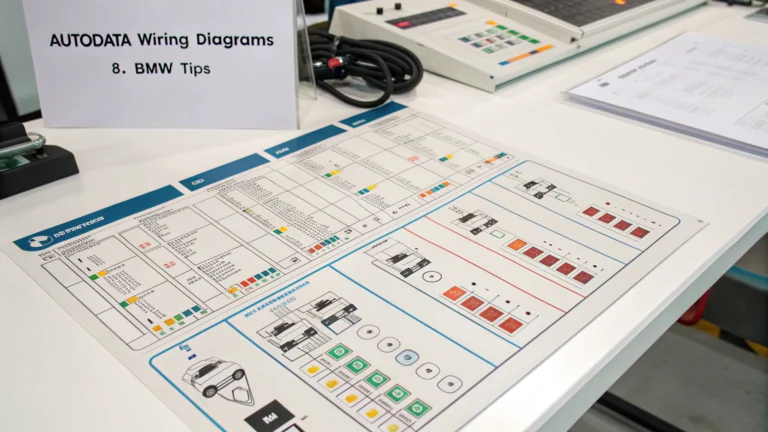
(Visual Suggestion: Insert a screenshot or visual excerpt from Autodata wiring diagrams showing component symbols and clear wire-color designations here.)
Step 6: Implement the Repair and Confirm Functionality
Conduct repairs according to diagnostic findings—replacing faulty connectors, harness segments, fuses, relays, or components identified through the Autodata diagram. Finally, verify functionality to affirm successful repairs.
Common Mistakes to Avoid
- Ignoring Updated Diagram Versions: Always verify you're working with the latest available diagram revision. Outdated technical resources lead to misdiagnosis frequently.
- Incorrect Identification of Components: Always verify diagram references match the actual vehicle layout precisely.
- Skipping Basic Electrical Checks: Even with great diagrams, skipping fundamental voltage, ground, or continuity checks can lead to rushed, incorrect assumptions and repeat visits.
Advanced Techniques
- Utilizing Interactive Diagram Features: Autodata interactive wiring diagrams allow you to isolate specific circuits dynamically, creating cleaner, focused views tailored to your specific repair.
- Cross-referencing Diagrams Between Platforms: Confirming findings across multiple trusted diagnostic references (Autodata, AllData, HaynesPro through AutoFixData) establishes conclusive diagnosis accuracy.
- Mastering Module Communication Circuits: Advanced CAN bus faults, notorious for system-wide issues, require careful tracing through network communication lines—Autodata diagrams help reveal hidden faults faster.
Tools and Resources Needed
Essential tools for effectively navigating Autodata wiring diagrams include:
- Reliable internet access to use AutoFixData
- Digital Multimeter (DMM) for basic electrical testing
- Automotive Oscilloscope (advanced diagnostic work)
- Diagnostic Scan Tools (for ECU/module communication verification)
- Circuit Testers and Wire Tracing Tools
- Comprehensive connector-pin testing kit (ideal for troubleshooting connectors)
Real-World Application: Case Study
Imagine diagnosing a 2017 BMW 5-series exhibiting intermittent Adaptive Cruise Control systems issues. Technicians initially struggled, repeatedly resetting ECUs without permanent fixes. However, Autodata wiring diagrams via AutoFixData quickly indicated a subtle wiring harness corrosion issue near the front bumper sensor connector—previously overlooked. Swift repairs validated by accurate schematics permanently resolved the issue, saving dealership reputation, time, and customer satisfaction significantly.
(Visual Suggestion: Before-and-after connector repair images or screenshots from Autodata clearly pointing to exact connector locations.)
Conclusion
Accurate diagnostics are foundational to automotive services. Mastering the use of an autodata wiring diagram drastically reduces guesswork, improves precision, saves valuable work hours and dramatically enhances customer satisfaction. AutoFixData importantly grants automotive professionals dependable access to essential diagnostic platforms like Autodata, AllData, and HaynesPro—simplifying challenging diagnostics and strengthening workshop productivity and profitability.
Ready to streamline your diagnostics and access industry-leading Autodata wiring diagrams? Visit AutoFixData.com and explore our professional pricing plans today!
FAQs
Q1: Are Autodata wiring diagrams regularly updated?
Yes. Autodata wiring diagrams receive continuous updates directly from manufacturers. Utilizing AutoFixData ensures immediate access to current, accurate diagnostic information.
Q2: Can AutoFixData support multiple diagnostic platforms simultaneously?
Absolutely, subscribers can access AllData, AutoData, HaynesPro, and more—allowing convenient cross-referencing throughout repairs.
Q3: Do Autodata diagrams include European and Asian vehicles?
Yes. Autodata continuously expands its comprehensive database, covering extensive European, American, and Asian vehicle selections.
Q4: Can interactive Autodata diagrams speed up diagnostics?
Certainly. Interactivity allows for dynamic circuit isolation, significantly reducing repair time and enhancing efficiency.
Q5: Is specialized training required to use Autodata wiring diagrams effectively?
No specialized training needed. Autodata diagrams include legends and intuitive interfaces making diagnostic tasks straightforward for professional mechanics and DIY enthusiasts alike.