Introduction
As automotive technology becomes increasingly sophisticated, today's mechanics and garage owners depend greatly on robust diagnostic tools to troubleshoot the countless technical challenges they encounter daily. Whether it's diagnosing intermittent sensor faults, complex wiring issues, or identifying trouble codes efficiently, having quick and accurate access to comprehensive technical data is critical. The sheer volume of specialized technical resources available today often raises questions among automotive professionals about choosing reliable and effective solutions. That's precisely why so many mechanics rely heavily upon Autodata for comprehensive vehicle data insights and dependable repair procedures. But how accurate, easy-to-use, and helpful is Autodata actually from a mechanic's perspective? Today, we'll look closely at authentic Autodata reviews from professional mechanics to uncover the strengths, limitations, and real-world application of this leading diagnostic and repair information platform. We'll also highlight where AutoFixData's integrated access to Autodata, AllData, and HaynesPro provides unique advantages in tackling common and advanced automotive issues.
Problem Identification
One common diagnostic challenge technicians face regularly is the dreaded intermittent fault. According to industry data, intermittent electrical issues account for over 40% of difficult-to-diagnose problems faced by automotive workshops. Unlike hard failures, intermittent faults leave technicians guessing; causing delays, customer dissatisfaction, and potentially loss of business.
Moreover, as vehicles incorporate more layers of complexity—such as hybrid/electric systems, advanced driver-assistance features, and extensive data networks—traditional diagnostic methods can easily fall short.
Mechanics require not only precise wiring schematics but detailed diagnostic and troubleshooting protocols structured by automotive manufacturers themselves. Lack of access to manufacturer-specific guided diagnostics can dramatically slow down repair time and introduce costly diagnostic errors.
Technical Background
To understand the value identified in Autodata reviews, it’s essential to first clearly define what modern automotive diagnostic tasks entail. Today's vehicle systems are highly integrated networks of sensors, control units (ECUs), wiring harnesses, actuators, and mechanical responses—all coordinated precisely using computerized logic.
Take an intermittent engine misfire, for example. Diagnosing such a condition goes beyond simply pulling OBD-II fault codes; the technician must understand how the following subsystems interact:
- Fuel injection system
- Ignition coil and spark delivery network
- Sensors (MAF, MAP, CKP, CMP Sensors)
- Fuel pressure sensors and regulators
- Wiring harness and connectors
- Engine control module parameters
Without ready access to accurate diagrams, diagnostic fault flow charts, pin-out specifications, or precise measurement reference data, diagnosing such problems can involve hours of guesswork.
Solution Overview
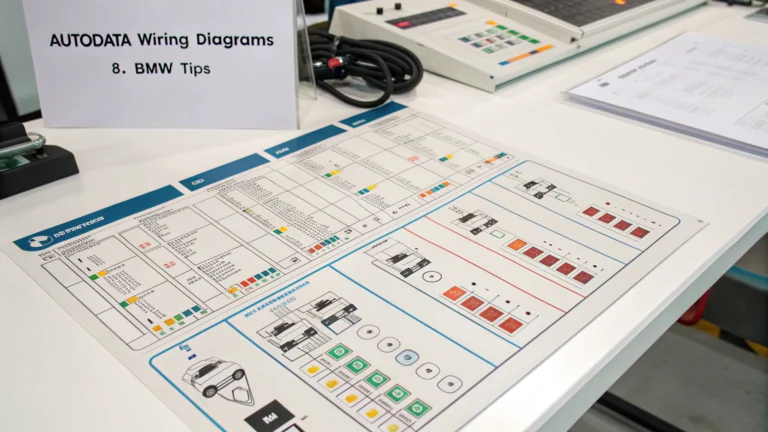
Platforms like Autodata have increasingly become invaluable tools for professional mechanics needing precise, comprehensive automotive data. Authentic Autodata reviews consistently point out its strength in providing quickly accessible wiring diagrams, manufacturer-specific diagnostic procedures, troubleshooting guides, torque specifications, and service-intervention processes.
Integrating seamlessly via AutoFixData, mechanics also benefit from unified access to similarly powerful resources such as AllData and HaynesPro—further enhancing the possibility of quickly finding all necessary vehicle data from a comprehensive portal.
Key features praised in mechanic-driven Autodata reviews:
- Clear and intuitive wiring diagrams
- Easy-to-follow manufacturer repair processes
- Accurate data on torque, fluid specifications, and timing intervals
- Diagnostic flowcharts and step-by-step troubleshooting procedures
- Complete coverage of European, Asian, and American makes
- User-friendly, rapid digital interface optimized for workshop use
Step-by-Step Process
Step 1: Identify Vehicle and Symptoms
Use Autodata to select the precise vehicle's make, model, year, engine type and symptom details clearly to refine the diagnostic process and streamline data retrieval.
Step 2: Retrieve Fault Code Diagnostics
Insert scanner, obtain DTC codes, and enter these codes directly into Autodata's diagnostic module. It quickly links fault codes to their related vehicle-specific diagnostic flowcharts.
Step 3: Access Relevant Wiring Diagrams
Carefully study Autodata's wiring schematics specific to your vehicle and identified components. Pay attention to connector diagrams, pin locations, voltage and resistance specifications.
Step 4: Conduct Component Tests
Follow Autodata's manufacturers-level guided testing procedures to verify sensor performance, injector pulses, ignition voltage availability, and wiring continuity.
Step 5: Validate the Repair
Once faulty components have been diagnosed and repaired or replaced according to Autodata recommendations, perform road tests or idle tests referenced in the diagnostic procedures to validate successful repairs.
(Recommended to include technical screenshots here from Autodata’s wiring diagrams and diagnostic processes.)
Common Mistakes to Avoid
Autodata reviews from seasoned mechanics consistently highlight certain pitfalls:
- Skipping detailed wiring checks: Many neglect thorough wiring harness and connector visual inspections, overlooking loose or corroded connections.
- Over-reliance on generic diagnostic paths: Despite Autodata’s guided diagnostics, some mechanics jump straight to guesswork repairs outside manufacturer pathways, causing additional diagnostic time and misdiagnoses.
- Incorrect data referencing: Occasionally, technicians rely solely on memory or generic torque specs rather than Autodata’s accurate OEM-specified values, resulting in additional component damage or premature failure.
Advanced Techniques
Seasoned mechanics repeatedly highlight Autodata not just for its beginner-friendly visual resources—but also for the depth of advanced data useful during complex problems such as misfires, electrical gremlins, connectivity issues, and software-driven ECU malfunctions.
Advanced professional insights recommended when using Autodata include:
- Using advanced ECU pin-outs and voltage reference values to isolate difficult-to-find electrical anomalies.
- Cross-referencing factory-level diagnostic issue bulletins explicitly available in Autodata and pairing them with information from AllData and HaynesPro for a multi-perspective diagnostic approach.
- Supplementing Autodata’s torque specifications and timing instructions with technician notes and real-world adaptations encountered during repeated job experiences.
Tools and Resources Needed
Based on industry standards and Autodata reviews from mechanics, vital tools for efficient diagnosis include:
- Professional-quality scan tool capable of detailed live data stream evaluation
- Multimeter or oscilloscope for precise voltage, frequency, and continuity testing
- A reliable PC or tablet for accessing and navigating Autodata, AllData, or HaynesPro (available through AutoFixData)
- Professional-grade soldering equipment, wiring repair kits, OEM replacement connectors
- Specialized test probes, jumper leads, and breakout boxes suitable for detailed electrical diagnostics
Real-World Application
Marc’s Automotive, a busy shop in New York specializing in European models, faced recurrent misfire concerns on a client's Volkswagen Golf MK7 1.4-liter TSI. Traditional diagnostic testing proved inconclusive. After numerous hours of trial methods, Marc reviewed Autodata diagnostic flowcharts and wiring diagrams clearly provided on AutoFixData.
Using a guided scenario outlined step-by-step within Autodata’s diagnostic process—specifically involving ignition coil voltage readings in live data mode—Marc quickly identified previously overstressed coil wiring connectors that intermittently broke contact under load. A straightforward repair recommended in Autodata’s technical bulletin led directly to a confirmed fix, restoring smooth engine operation reliably.
Conclusion
Detailed Autodata reviews from real-world mechanics illustrate strongly why so many professionals depend heavily upon this powerful diagnostic resource. Autodata’s precise, OEM-accurate technical information significantly reduces guesswork, saves precious diagnostic time, and consistently leads to more accurate, durable repairs.
As an integrated AutoFixData portal combining Autodata with proven supplementary sources like AllData and HaynesPro, automotive technicians gain a broadened capability, enhanced accuracy, and unrivaled efficiency. Using solutions like these, garages dramatically improve customer satisfaction and workshop profitability.
Ready to transform your diagnostic accuracy? Explore affordable subscription packages tailored for your workshop size and requirements: AutoFixData Pricing Plans.
FAQs
Q: How accurate is Autodata referenced torque data, and can it confidently replace physical vehicle manuals?
A: Autodata torque data is manufacturer-derived, making it exceptionally accurate and reliable for professional repairs. It can confidently replace physical manuals.
Q: Does Autodata have service bulletins and recalls information available?
A: Autodata contains extensive recall and service bulletin information for hundreds of makes and models, regularly updated for accuracy.
Q: Is Autodata coverage extensive enough for all automotive makes, such as European vehicles?
A: Autodata has robust comprehensive coverage, including American, Asian, and exceptionally thorough coverage of European vehicle brands, as recognized by mechanics globally.
Q: Can Autodata’s wiring diagrams alone suffice in wiring repairs?
A: Autodata’s wiring diagrams are detailed and precise; when paired with recommended diagnostic tools and procedures, they typically suffice for efficient wiring repairs.
Equip your shop for greater diagnostic accuracy today by checking out our accessible and affordable subscriptions: View Plans Now.