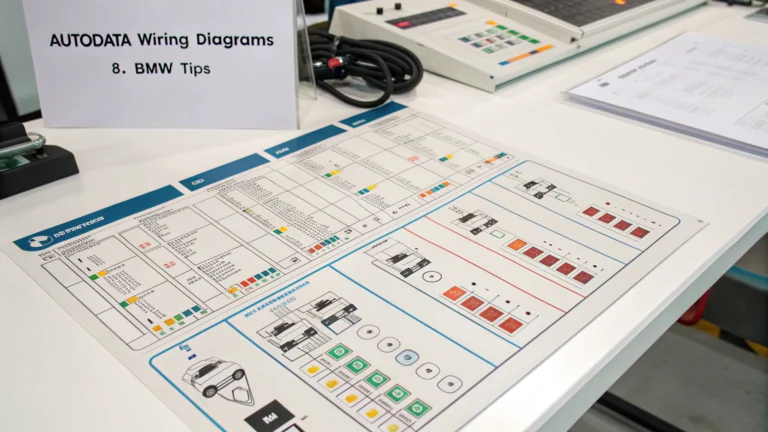
Autodata's Support for Electric Vehicles
Introduction
As the automotive industry rapidly transitions toward electric vehicles (EVs), mechanics, garage owners, and auto enthusiasts face new technical challenges. Diagnosing and servicing electric vehicles involves specialized procedures and diagnostic equipment. Traditional repair methods and data resources designed primarily for internal combustion engines aren't sufficient for comprehensive EV service. That’s where Autodata EV support helps bridge the knowledge gap. Autodata, accessible through AutoFixData, offers mechanics robust diagnostic information tailored specifically to the unique technical demands of electric vehicles, enhancing efficiency, accuracy, and confidence.
In this comprehensive guide, we'll delve into common diagnostic hurdles EV technicians encounter, clarify technical details about EV-specific systems, and demonstrate how Autodata EV solutions, readily available via AutoFixData, simplify diagnosis, repairs, and service procedures.
Problem Identification: Common Diagnostic Challenges in EVs
With electric vehicles quickly populating roadways, garages are now confronted with specific diagnostic challenges they've rarely dealt with before. Unlike traditional gasoline or diesel engines, EVs rely on highly sophisticated lithium-ion batteries, high-voltage charging systems, inverter assemblies, and electric motors—all components demanding specialized diagnostic software expertise.
Technicians who attempt EV diagnostics using generic or incomplete resources often struggle with issues such as:
- Limited access to vehicle manufacturer-specific diagnostic procedures
- Insufficient information related to battery state-of-health (SOH), cell imbalance issues, or capacity degradation
- Difficulty identifying precise fault codes related to EV-specific components (e.g., power electronics, software calibration problems)
- Challenges correctly interpreting hybrid/electric powertrain data logs and performance metrics
According to a recent industry survey, up to 70 percent of independent automotive repair garages reported missing essential information for accurate EV diagnostics. Many encountered downtime delays, misdiagnoses, and safety risks due to incomplete or incorrect technical data. Clearly, automotive professionals require detailed, reliable, and specialized diagnostic resources precisely calibrated for EV servicing.
Technical Background: Critical EV System Components and Diagnostic Considerations
Before using Autodata EV diagnostic capabilities, mechanics must clearly understand the key EV components and diagnostic implications. The following EV systems require expert diagnostic proficiency:
Electric Drive Motor & Inverters
The electric motor replaces the traditional combustion engine, providing torque directly to wheels. EVs commonly use permanent magnet AC synchronous motors or AC induction motors. The inverter converts DC battery voltage to AC to run these high-voltage motors. Diagnosing these components involves interpreting precise electrical signal data, identifying inverter fault codes, and monitoring motor temperature parameters.
High-Voltage Lithium-Ion Batteries
The EV battery remains among the most critical—and expensive—components. Diagnostic procedures involve assessing the battery management system (BMS), analyzing the condition of battery cells, monitoring state-of-charge (SOC), state-of-health (SOH), and balancing voltage discrepancies among battery cells. Incorrectly diagnosing the battery can lead to costly repairs or hazardous situations.
Charging System Diagnosis
EV charging systems, including onboard chargers (OBC) and DC fast-charging capability, often present unique issues. Diagnostics for charging components must address communication protocols, relay faults, wiring integrity, and temperature management systems.
Thermal Management Systems
Thermal management is critical to the longevity and efficiency of EV batteries and power electronics. Technicians must properly diagnose cooling pumps, circuit blockages, coolant leaks, and temperature sensor readings within EV thermal management loops.
Solution Overview: Using Diagnostic Platforms for EV Troubleshooting
Fortunately, diagnostic platforms like Autodata EV simplify complexity significantly. Available via AutoFixData's intuitive interface, Autodata provides in-depth access to OEM-derived EV technical data. Using Autodata for electric vehicle troubleshooting includes:
- Detailed wiring schematics and pin diagrams tailored to various EV makes and models
- Precise fault codes and their interpretations specific to electric powertrain and high-voltage systems
- Step-by-step procedures for safely conducting battery testing and BMS calibration
- Data-driven insights into charging management and thermal control systems diagnosis
AutoFixData subscribers leveraging Autodata EV tools gain an immediate troubleshooting advantage, maximizing diagnostic efficiency in an evolving automotive landscape.
Autodata EV Diagnostic Guide: Step-by-Step Process
Step 1: Selecting the Correct Vehicle Data
Within AutoFixData, select the vehicle make, model, and detailed specifications via Autodata EV. Confirm precise EV specifications drawn from manufacturer's original data.
Step 2: Connect an EV-Compatible Scan Tool
Use quality EV diagnostic scanning equipment to connect the vehicle through the OBD-II or custom vehicle port, scanning for high-voltage powertrain fault codes and live parameter data.
Step 3: Interpret EV-Specific DTCs and Freeze-Frame Data
With Autodata EV’s DTC interpretation resources, technicians can quickly diagnose faults like isolation faults (specific to high-voltage systems), inverter control faults, and detailed battery management system alerts.
(Suggestion: Insert visual diagrams or screenshots from Autodata EV showing sample EV fault interpretation screens for clarity.)
Step 4: Perform Battery State-of-Health Testing
Follow Autodata EV’s precise guidance on battery diagnostics procedures, such as battery cell balancing procedures, assessment of SOH, and identifying underperforming battery modules.
Step 5: Verify Charging System and Thermal Management
Autodata EV provides explicit charging system inspection protocols, thermal management diagnostics, cooling/heating loop inspection routines, and verification of related sensors and actuators.
Step 6: Implement Corrective Measures and Validate Repairs
After completing repairs, utilize real-time data logging, supported by Autodata EV's OEM-centered insights, to confirm successful fixes and validate proper component function.
Common Mistakes to Avoid
- Ignoring OEM-Derived Diagnostic Procedures: EV-specific parameters vary widely across manufacturers and models, making OEM-based Autodata EV data essential.
- Neglecting Safety Practices: Working around high voltage batteries requires strict adherence to safety equipment standards. Autodata EV includes detailed safety checklists.
- Misinterpreting Battery Data: Incorrectly assessing battery health can lead to unnecessary battery replacement. Autodata EV provides accurate cell-level diagnostics to help mechanics avoid costly errors.
Advanced Techniques: Professional-Level Insights with Autodata EV
Experienced EV technicians know advanced techniques, such as deep battery cell-level analytics, high-voltage isolation fault diagnostics, and software calibration updates, are essential for complex issues. Autodata EV supports professionals by providing access to OEM-level calibration, coding, and adaptation procedures, sophisticated cell-balancing solutions, and datalog interpretation techniques.
Tools and Resources Needed
For successful EV diagnosis, the following tools and resources are essential:
- Dedicated EV-compatible diagnostic scan tools (e.g., Launch X431 EV models, Snap-On EV scanner, Autel MaxiSys EV)
- Proper high-voltage protective equipment (HV safety gloves, insulated tools, multimeters rated CAT-III or greater)
- Access to Autodata EV platform via AutoFixData subscription account
- OEM-derived EV schematics, fault code references, and thermal management control data via Autodata
Real-World Application: Case Study Example
Consider a recent case involving a Tesla Model S experiencing a sudden charging malfunction and range loss. Utilizing Autodata EV accessible through AutoFixData, the technician efficiently identified a battery cooling loop error—causing overheating and battery performance degradation. Using precise Autodata EV procedures to pinpoint blocked coolant lines and faulty temperature sensors, the issue was promptly rectified. Resulting in minimized downtime, cost-efficiency, and improved customer satisfaction.
Conclusion
As electric vehicle adoption climbs, so too does the demand for accurate, professional-level diagnostics. Autodata EV, available from AutoFixData, integrates precisely the OEM data technicians need to diagnose EVs confidently, accurately, and safely. From detailed schematics to advanced battery diagnostics, Autodata EV establishes your garage as EV-capable, efficient, and prepared for the future of automotive repair.
Engage your workshop fully into the EV revolution. Explore subscription options today to access Autodata EV solutions:
Explore AutoFixData Pricing
FAQs
What makes diagnosing EVs different from traditional vehicles?
EVs involve high-voltage battery systems, electric motors, inverters, and specialized thermal management—requiring unique diagnostic strategies found in Autodata EV.
Is special equipment needed to diagnose EVs effectively?
Yes. EV diagnosis demands specialized scan tools, insulated tools, and high-voltage safety equipment.
Can Autodata EV resources help me service hybrid vehicles too?
Absolutely. Autodata covers extensive diagnostic and service information for both hybrid and fully electric vehicles.
Do I need specific training to utilize Autodata EV effectively?
Basic EV diagnostics skills and safety awareness are strongly recommended. Autodata EV data clearly guides you through most procedures.
Empower yourself with Autodata EV resources today. Unlock comprehensive EV diagnostic technology at AutoFixData Pricing.