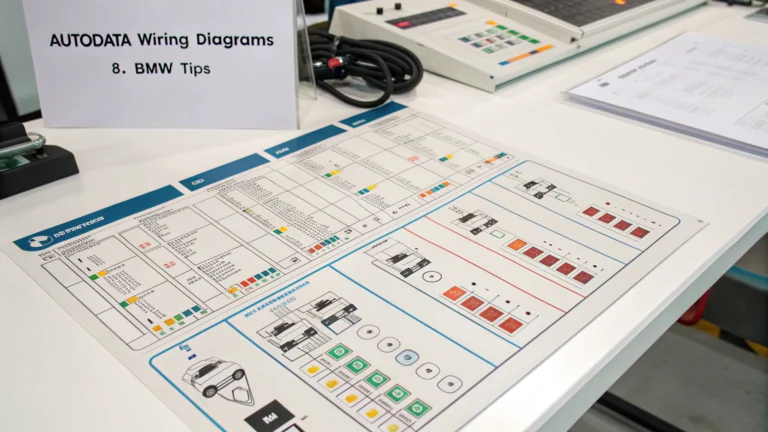
Autodata's Labour Time Calculations: Expert Insights for Accurate Diagnostics
Introduction
Diagnosing and repairing vehicles efficiently hinges significantly on how accurately technicians estimate labour time. Without precise labour estimates, repair shops face challenges including scheduling disruptions, inaccurate job costing, and dissatisfied customers. Autodata labour time calculations have become indispensable tools that mechanics and garage owners rely on to accurately forecast repair durations, manage workloads, and price repairs competitively.
Yet, mechanics frequently grapple with interpreting and effectively utilizing these labour times due to intricate vehicle repair nuances and evolving automotive technology. AutoFixData addresses this essential need by providing comprehensive access to industry-leading automotive diagnostic systems, including Autodata, AllData, and HaynesPro. Leveraging these trusted platforms ensures accurate labour estimations, streamlined workflows, and increased profitability for repair shops.
In this guide, we'll break down how Autodata labour time standards are calculated, how automotive professionals can interpret and apply them accurately in real-life scenarios, and demonstrate how AutoFixData users can optimize their diagnostic workflow to save valuable time and resources.
Problem Identification
Accurate labour estimation remains a frequent and costly challenge among auto repair professionals. According to industry surveys, inaccurate labour time calculations account for up to 15-20% loss in productivity and can significantly affect profitability. Incorrect labour values can result in customer disputes, employee frustration, and sub-optimal scheduling.
Common critical issues include:
- Misinterpretation of manufacturer-specific terminology in servicing procedures.
- Difficulty translating printed labour times to real-world repair conditions.
- Inaccurately accounting for tasks such as obstructed component access, rusted or seized bolts, or unexpected complications.
This underscores the necessity of reliable diagnostic data providers like Autodata, integrated through comprehensive diagnostic solutions such as AutoFixData.
Technical Background
The Importance of Labour Time Calculation in Automotive Repair
Labour times in automotive repairs denote estimated hours required by an experienced technician, equipped appropriately and following specific manufacturer procedures, to complete a given task. Autodata labour time data sets are carefully compiled documents based on comprehensive, real-world automotive industry research, rigorous procedures, standardized timing, and manufacturer specifications.
Key factors influencing Autodata’s labour time benchmarks include:
- Manufacturer Specifications: Official OEM data serves as a foundation for base times.
- Experienced Technicians: Timings are established to reflect realistic workplace conditions performed by skilled mechanics.
- Procedural Accuracy: Labour times reflect strictly following recommended repair methods, not shortcuts.
- Special Tools & Equipment: Calculations factor in availability and utilization of proper equipment and specialized tooling.
- Vehicle Age & Condition: Certain times include adjustments for typical age-related barriers such as corrosion or seized components.
However, while Autodata labour times are meticulously assembled, mechanics must use experience and judgment to adapt this baseline to specific repair challenges.
Solution Overview
Through AutoFixData, mechanics gain direct access to top-tier diagnostic platforms, including Autodata, AllData, and HaynesPro. Integrated digital solutions empower users to:
- Accurately determine Autodata labour time estimates.
- Adjust labour estimates for real-world scenarios.
- Perform efficient vehicle diagnostics.
- Access OEM-specific repair methods promptly.
Features such as interactive exploded diagrams, integrated wiring schematics, and structured repair data significantly streamline tasks. AutoFixData combines these powerful resources, simplifying complex repairs into manageable, accurate job estimations.
Step-by-Step Process
Step 1: Accessing Autodata Labour Time Information
First, log into your AutoFixData account. Navigate directly to "Labour Time Estimates," easily accessed via the intuitive menu.
Step 2: Vehicle Identification
Accurately inputting complete vehicle-specific information (VIN, year, make, model, engine details) ensures accuracy for your Autodata labour time search results.
Step 3: Component or Task Selection
Browse or search clearly indexed tasks. Autodata lists labour times per component, system, or repair task. Clearly select the exact repair or replacement job needed.
Step 4: Analyze Labour Time Data Provided
Autodata clearly breaks down standard, manufacturer-certified labour calculations. Review the suggested timeframe, noting any additional conditions or prerequisites, ranging from partially overlapping tasks to additional servicing recommendations.
Step 5: Consider Condition-Based Adjustments
Realistically evaluate the specific vehicle condition: Assess common issues (rust, stripped threads, seized components) and incorporate these into your time estimation, adjusting slightly upward to reflect realistic conditions using experience or shop guidelines.
Step 6: Final Estimation & Customer/Job Scheduling
Present an accurate real-world adjusted labour time to the customer or scheduling staff, promoting transparency and clear communication about repair expectations and potential variables.
Common Mistakes to Avoid
To maximize the benefits of Autodata labour time, avoid common pitfalls:
- Ignoring Real-World Conditions: Always consider real vehicle conditions, as Autodata labour times assume ideal or controlled circumstances.
- Skipping Vehicle Details: Incorrect data inputs, such as inaccurate year or engine type, heavily affect labour time accuracy.
- Combining Tasks Incorrectly: Understand overlapping tasks clearly to prevent unnecessary double-counting of labour time.
- Misinterpretation of OEM Labour Methodology: Always confirm via context notes provided within your diagnostic software from Autodata or AutoFixData before beginning procedures.
Advanced Techniques
For professionals looking to sharpen workshop efficiency further:
- Leverage Digital Integration: Integrate your CRM or workshop software with AutoFixData’s platforms for seamless labour time integration into estimations and invoicing.
- Analyze Data Trends: Routinely audit previous Autodata labour times utilized versus actual job completion times, refining internal estimates.
- Staff Training Integration: Provide technicians direct access to Autodata within AutoFixData, maximizing technician awareness of job-specific conditions and OEM procedural clarifications.
Tools and Resources Needed
Key resources to achieve accurate Autodata labour time estimations:
- Comprehensive Diagnostic Software (AutoFixData with Autodata, AllData, HaynesPro included): Direct reference to OEM-approved repair procedures and guidelines.
- Professional Mechanic Tools: Utilize standard shop equipment alongside manufacturer-specified specialty tools found within Autodata solution entries.
- Data Logging System: Track previously executed estimations to continuously refine accuracy and reliability.
- Digital Devices (tablet/computer): Real-time, on-the-job access to Autodata’s comprehensive diagnostic guidelines.
Real-World Application
Case Study: Timing Belt Replacement Efficiency Improvement
Recently, Smith’s Auto & Repair faced repeated issues accurately estimating timing belt replacements on complex V6 models. Previously relying on outdated guides, their time estimations regularly fell short, resulting in dissatisfied customers. After switching to AutoFixData and Autodata labour time calculations, Smith's technicians correctly anticipated common complications—corroded water pump bolts and seized pulleys—by easily identifying job-specific challenges noted in Autodata’s diagnostic guides.
Implementing more accurate labour estimations using Autodata decreased scheduling overruns by 30%, improved technician morale, and increased customer satisfaction due to clear communication on repair duration and complexity.
Conclusion
Precisely calculating labour times is critical to automotive repair shop efficiency, profitability, and customer satisfaction. Autodata labour time calculation sets the industry standard by providing consistently accurate, OEM-approved procedural times. Paired with AutoFixData’s comprehensive platform integrations—including direct access to trusted names like AllData and HaynesPro—repair professionals effortlessly optimize efficiency, accuracy, and profitability.
To start accurately estimating labour time and streamline your workshop productivity today, explore our AutoFixData diagnostic platform subscription options below:
FAQs
Q1: How Reliable Are Autodata Labour Times?
A1: Autodata labour times are highly dependable due to rigorous research, OEM-standard benchmarks, and real-world validation by seasoned auto mechanics.
Q2: Do Autodata Labour Calculations Include Allowances for Rusted or Seized Components?
A2: Base times do consider standardized real-world conditions, but additional complications like severe rust or damage should be estimated accordingly.
Q3: Can I Adjust Autodata Labour Estimates Manually?
A3: Yes, Autodata times serve as a baseline. Experienced technicians frequently adjust estimates to reflect specific vehicle conditions or frequently encountered obstacles.
Q4: How Often Are Autodata Labour Times Updated?
A4: Autodata labour times receive routine updates to reflect new vehicles, updated repair procedures, tooling, and industry feedback typically several times annually.
Q5: Is Autodata Accessible Through AutoFixData Subscription?
A5: Absolutely. Subscribers gain seamless, integrated access to Autodata labour time data along with other premium diagnostic platforms like AllData and HaynesPro, directly benefiting repair accuracy and shop profitability.