Introduction
One of the most frustrating scenarios a mechanic encounters is the dreaded warning light illuminating on the customer's instrument cluster, accompanied by symptoms that don't point directly to a single component. Vehicle diagnostics have evolved rapidly, yet identifying the root cause of complex automotive issues remains a challenge. Without accurate technical data, mechanics risk misdiagnosis, wasted labor hours, and customer dissatisfaction. That's precisely why employing high-quality resources like Autodata diagnostics has become integral to automotive repair professionals.
Autodata diagnostics provide structured, tabulated, and reliable repair information tailored for professional mechanics. Integrating platforms such as Autodata into your diagnostic process significantly improves troubleshooting accuracy, reducing guesswork, and accelerating repair throughput. At AutoFixData, we bring mechanics and automotive enthusiasts convenient, up-to-date access to top industry solutions like Autodata, AllData, and HaynesPro, empowering you to tackle even the trickiest repairs with confidence.
In this comprehensive guide, we'll delve into the exact techniques for using Autodata for vehicle diagnostics, providing mechanic-friendly explanations, advanced professional tips, real-world case studies, and actionable insights that streamline workflow, enhance profitability, and boost customer satisfaction.
Problem Identification
Diagnostic challenges mechanics face today range from seemingly straightforward "Check Engine" lights to complex intermittent electronic problems. Simple faults often mask underlying issues in advanced automotive systems, and without accurate technical guidance, mechanics risk misdiagnosis and unnecessary replacements. Recent surveys indicate over 35% of automotive repairs initially misdiagnosed relate chiefly to insufficient or misunderstood diagnostic information.
Moreover, modern vehicles incorporate hybrid technologies, sophisticated computer modules, multiplex wiring systems, and CAN bus communication—making traditional troubleshooting techniques inadequate.
Common issues exacerbating diagnostic complexity include:
- Intermittent electronic faults
- CAN bus network disruptions
- Advanced Driver Assistance Systems (ADAS) malfunctions
- Emission and exhaust-related anomalies
- Fault code cross-contamination between systems
- System updates and module reprogramming complexities
With growing complexity, it’s nearly impossible to effectively diagnose modern vehicles without accurate, structured, and user-friendly diagnostic platforms—precisely why Autodata diagnostics serve as instrumental solutions for professional garages.
Technical Background
To accurately diagnose vehicles, mechanics must comprehend automotive subsystems, electronic control modules (ECMs), and digital communication networks like CAN bus. Most vehicle diagnostics nowadays utilize standardized On-Board Diagnostics (OBD-II) protocols as a starting point.
Today's vehicle electrical components—such as engine management units, ABS/ESP modules, drivetrain controllers, HVAC systems, and infotainment—communicate digitally. Misdiagnosing these electronic systems often leads to unnecessary component replacement, prolonged repair times, and customer dissatisfaction.
To make informed diagnostic decisions, mechanics require structured technical information, such as wiring diagrams, diagnostic trouble codes (DTCs) explanations, testing procedures, component specifications, torque values, and reprogramming procedures. With accurate data, diagnosis and repair can proceed rapidly, reliably, and cost-effectively.
Solution Overview
When facing tough diagnostic challenges, platforms such as Autodata diagnostics simplify complex vehicle systems into usable, mechanic-friendly technical information. Below are key Autodata features available through your AutoFixData subscription that streamline diagnostic procedures:
- Comprehensive DTC Interpretation: Clear explanations of trouble codes, prioritized troubleshooting procedures, and appropriate corrective measures.
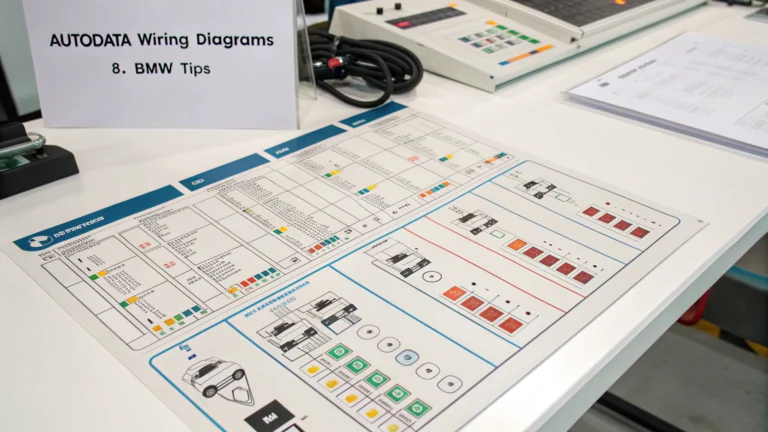
- Vehicle-Specific Wiring Diagrams: Interactive schematics with detailed pinpoint tests and color coding.
- Guided Component Testing Procedures: Step-by-step test instructions with clear voltage/resistance/continuity values.
- Technical Specifications and Torque Settings: Accurately listed, easy-to-access specifications to ensure precise component replacement.
- Service Bulletin Integration (TSBs): Instant access to manufacturer notices and known defects, speeding fault resolution.
- Advanced System Information (CAN/Multiplex): Enhanced guidance on complex communication networks, reducing guesswork.
Step-by-Step Process: Using Autodata Diagnostics Effectively
Follow this structured, proven diagnostic approach using Autodata:
Step 1: Gather Initial Scan Tool Data
- Plug your OBD-II scanner or advanced diagnostic tool into the vehicle's port.
- Read and document all current, pending, and historical DTCs.
- Include freeze-frame data and sensor outputs.
Step 2: Navigate Autodata’s DTC Dashboard
- Log into your Autodata via your AutoFixData portal.
- Input vehicle make, model, year, and engine specifics.
- Enter diagnostic trouble codes into the platform.
Step 3: Identify Priority Faults and Common Issues
- Autodata lists associated repairs, known faults, and relevant TSB updates.
- Identify which issues should be addressed first to resolve symptoms efficiently.
(Tip: Leverage Autodata 'Known Fixes' features that highlight verified solutions from manufacturer data.)
Step 4: Study and Implement Wiring Diagrams
- Review Autodata’s interactive wiring diagrams highlighting affected circuits or systems.
- Perform pinpoint tests outlined by diagrams and systematic testing instructions within the software.
Step 5: Perform Guided Component Tests
- Follow Autodata's comprehensive testing procedures.
- Check specified voltages, resistance values, grounds, and communication signals as recommended.
- Replace confirmed faulty components based on verifiable data.
Step 6: Clear Codes and Test Drive
- Clear fault codes from the vehicle ECM modules.
- Perform a road test to confirm the issue resolution.
Step 7: Optional Calibration or Software Updates
- Use Autodata’s module programming/calibration sections for vehicles needing software reprogramming or recalibration after repairs.
Common Mistakes to Avoid
When using Autodata diagnostics, avoid these common pitfalls:
- Skipping Thorough Initial Scans: Always gather and document all relevant diagnostic information upfront.
- Ignoring Technical Service Bulletins: Confirm whether manufacturer notices or TSBs directly affect your diagnosis to prevent redundant troubleshooting.
- Relying Solely on Fault Codes: DTCs guide technicians but don't always pinpoint a specific faulty component; always confirm faults with guided component testing and manual checks.
- Incomplete Wiring Checks: Avoid assumptions—use Autodata wiring diagrams consistently to verify continuity, grounding, and power supply integrity.
Advanced Techniques for Professional Mechanics
For seasoned technicians seeking deeper diagnostic insights, incorporate these Autodata-enhanced advanced methods:
- CAN Bus Analysis: Utilize Autodata topology diagrams to understand module relationships and communications on shared CAN networks.
- Oscilloscope Testing: Correlate Autodata scope pattern references to perform advanced waveform diagnostics for injectors, ignition coils, and sensors.
- Hybrid & EV System Testing: Use Autodata's specialized hybrid and EV diagnostic guides for safe and effective analysis and repair.
Tools and Resources Needed
Successful vehicle diagnostics leveraging Autodata require essential tools:
- Professional OBD-II scan tool or advanced diagnostic machine
- Multimeters and oscilloscopes for electrical and ignition system tests
- Manufacturer-compatible reprogramming tools
- Quality Autodata subscription accessed via AutoFixData.com
Autodata diagnostics integrate seamlessly with industry-standard diagnostic equipment, making it an ideal resource in modern workshops and dealerships.
Real-World Application Case Study
Consider a recent workshop scenario—a Land Rover Discovery displaying multiple intermittent electrical faults. Initially, fault codes pointed simultaneously toward ABS, Stability Control, and Engine Management systems.
By accessing Autodata diagnostics through AutoFixData, the mechanic reviewed system topology and wiring diagrams. Guided by Autodata troubleshooting steps, they identified a subtle wiring harness chafing issue causing CAN bus interference between vehicle modules. Instead of costly ECM replacements or unnecessary component swapping, a replacement wiring harness resolved all fault codes and restored normal vehicle operation.
This case highlights clearly how Autodata diagnostics provided immediate, accurate troubleshooting procedures, reduced repair time significantly, and satisfied the customer, enhancing workshop reputation.
Conclusion
Modern vehicles present increasingly complex diagnostic challenges, requiring structured, reliable, and accurate diagnostic information. Mechanics utilizing platforms like Autodata diagnostics through AutoFixData improve accuracy, reduce troubleshooting time, and boost diagnostic confidence.
By employing the comprehensive resources, advanced procedures, and time-tested methods outlined above, you empower your automotive business, reduce comeback repairs, save valuable time, and deliver unparalleled service quality.
Experience firsthand how Autodata diagnostics offered by AutoFixData can elevate your diagnostics workflow—eliminating guesswork and increasing profitability.
Explore AutoFixData Pricing & Plans Today
FAQs
What differentiates Autodata diagnostics from other technical resources?
Autodata offers exceptional user-friendliness, accurate repair data, guided testing procedures, regularly updated information, and integrated TSBs from manufacturers, providing a holistic approach to vehicle diagnostics.
Are Autodata's wiring diagrams interactive?
Yes—Autodata provides fully interactive, color-coded wiring diagrams specifically suited for pinpoint tests.
Is Autodata diagnostics effective for hybrid and electric vehicles?
Absolutely—Autodata features dedicated diagnostic procedures, safety instructions, and component testing specifically tailored for hybrid and EV vehicles.
Does Autodata streamline recalibration and programming procedures?
Yes, Autodata provides clear guidance on calibration and software updates, including direct procedures for OEM modules, saving hours in dealership-level diagnostics.
How frequently is Autodata updated with new diagnostic information?
Autodata continually updates its database in alignment with manufacturer data, ensuring subscribers have access to timely, relevant diagnostic procedures and information.