
Introduction
Every automotive technician or garage owner knows the dilemma—staring at a bundle of seemingly indistinguishable wires, trying to track down a troublesome electrical fault. Right at the heart of this challenge lies the accurate interpretation of wiring diagrams, specifically deciphering Autodata wiring color codes.
From tracking down intermittent faults to pinpointing blown fuses and faulty relays, wiring challenges cost mechanics valuable time and efficiency. Misinterpretation can lead to unnecessary parts replacements, prolonged downtime, and costly repairs that frustrate your clients and impact profits.
Understanding Autodata wiring color codes can simplify diagnosis dramatically, boosting productivity and client satisfaction. AutoFixData.com equips technicians with easy access to trusted diagnostic platforms like AutoData, AllData, and HaynesPro, helping mechanics decipher wiring diagrams smoothly and rapidly.
In today’s detailed guide, we’ll expose seven essential Autodata wiring color codes secrets, enabling technicians and DIY enthusiasts alike to crack wiring complexity, solve electrical problems efficiently, and enhance operational performance.
Problem Identification
According to recent automotive industry surveys, electrical failures accounted for roughly 40% of roadside breakdowns and shop visits. Of these electrical diagnostic tasks, wiring diagram misinterpretation remains one of the common pitfalls mechanics experience.
Complex Automotive designs, integration of various electronic control units (ECUs), and the adoption of intricate wiring layouts make it increasingly challenging to accurately pinpoint faults without clearly understanding wiring color codes. Even experienced technicians misidentify wires due to subtle variations across manufacturers or even different wiring generation releases. All of these problems ultimately lead to inefficient diagnosis and costly corrective measures.
Technical Background
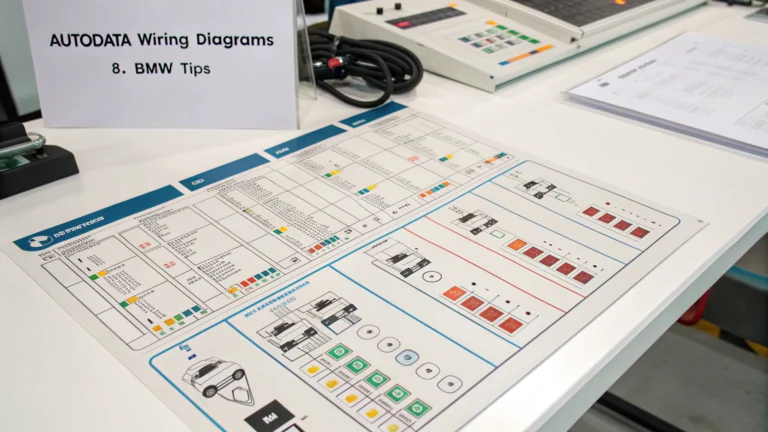
An automotive wiring diagram is a visual representation designed to simplify electrical systems to help auto technicians diagnose and repair faults. Wiring diagrams illustrate not only wire connections between components but clearly identify each wire by standardized color codes.
Color-coded wiring schematics are essential because wiring often runs in bundles containing dozens or even hundreds of different circuits. These color conventions help technicians instantly recognize wire functions—such as power feeds, grounds, sensor signal lines, CAN-bus networks, and relay trigger circuits.
Autodata wiring color codes utilize specific standardized color conventions adopted by automotive manufacturers globally. Exceptional familiarity with these conventions significantly accelerates diagnosis and troubleshooting, ultimately reducing time on the repair bay and increasing your shop’s productivity and profitability.
Solution Overview
Leading automotive diagnostic platforms, including AutoData, AllData, and HaynesPro, offer detailed wiring schematics conforming to manufacturer-specific color coding standards. AutoData wiring diagrams clearly highlight critical wire colors, circuit numbers, pin assignments, connectors, and component locations required to resolve mechanical or electrical issues rapidly.
AutoFixData offers simple, seamless access to these precise, intuitive diagnostic resources. Technicians utilizing AutoFixData’s solutions benefit from instant access to field-tested diagnostic data, clear wiring schematics highlighting critical color codes, and intuitive troubleshooting instructions.
Autodata Wiring Color Codes: Step-by-Step Process
To effectively harness Autodata wiring color codes, follow these structured steps:
Step 1: Identify the Correct Vehicle Data
Correct diagnosis begins with accuracy. Ensure you input the exact vehicle make, model, engine type, production year, and specific variant into your AutoData platform via AutoFixData. Incorrect vehicle identification leads directly to incorrect diagrams or subtle variations from the actual wiring.
Step 2: Interpreting Wire Colors Correctly
Autodata wiring diagrams use consistent colors linked to specific functionalities. Some common Autodata wiring color codes conventions include:
- Brown: Ground or earth wiring.
- Red: Constant or battery positive feed (supply voltage).
- Black: Ignition-controlled voltage feed (switched positive).
- Yellow: Sensor signal inputs or outputs.
- Blue: CAN-bus (digital signal communication lines).
- White/Grey: Signal circuits, input or output signals between modules.
- Green or green/yellow stripes: Protectively earth signals or chassis grounding connections.
Step 3: Trace Circuit Paths on the Autodata Diagram
Trace wires systematically through harnesses, connectors, and modules. Use Autodata’s interactive features like clickable schematics, wire highlighting, or zoom functionality (available via AutoFixData subscription) to track wire routes clearly, ensuring accurate visually guided diagnoses.
Step 4: Confirm Your Diagnosis with Connector Pinouts
Connector illustrations and pinouts directly integrated into AutoData wiring diagrams can further help verify wire identifications, connecting points, and pin numbers, ensuring careful attention to detail and precise results.
Step 5: Validate Connectivity & Continuity
After confirming correct wiring identification, validate any suspected wiring fault through continuity checks, voltage drop tests, or insulation and resistance measurements, ultimately diagnosing specific wiring issues accurately.
Common Mistakes to Avoid
When working with Autodata wiring color codes, beware these common pitfalls:
- Assuming Uniformity across Manufacturers: While wiring colors generally follow standardization, subtle differences and exceptions exist among certain makes or models.
- Skipping Reference Checks: Always cross-reference wire colors, pin numbers, and connector types within your Autodata schematic before diagnosing.
- Overlooking Manufacturing Year Changes: Remember, revisions in mid-cycle updates can sometimes alter wiring colors, connectors, or terminals considerably.
Advanced Techniques
Experienced mechanics can enhance troubleshooting efficiency using these professional-level techniques:
- Digital Multimeter Mastery: Leverage precise techniques such as voltage drop testing to diagnose poor grounds and hidden wiring issues accurately against Autodata color codes.
- Oscilloscope Waveform Diagnostics: Compare oscilloscope waveforms taken at specific wires to Autodata reference waveform examples, rapidly revealing subtle communication or intermittent signal failures through wire color-coded identification.
- Component-Specific Diagnostic Connection: Utilize manufacturer-specific connector breakout boxes and harness adapters to improve quick testing of individual circuits or pins defined clearly through accurate color-code referencing.
Tools and Resources Needed
To effectively use Autodata wiring diagrams and related color coding references, mechanics will require these essential tools and resources:
- Diagnostic Platform Access: AllData, AutoData, HaynesPro via AutoFixData subscription ensure accuracy and availability.
- Quality Digital Multimeter (DMM): For continuity, voltage, and resistance checks.
- Oscilloscope Diagnostic Tool: To analyze complex electronic signal patterns.
- Connector Test Kits and Breakout Boxes: For quick, secure testing connections.
Real-World Application
Let’s examine a recent case: a 2017 Volkswagen Golf had intermittent engine hesitation and occasional non-start issues. After inspecting fault codes, a technician initially suspected the fuel pump. However, after carefully examining Autodata wiring diagrams and checking the related Autodata wiring color codes, the technician noticed a subtle wiring discrepancy in a grounding circuit (brown) leading from the fuel pump relay.
Utilizing precise pinout data from AutoFixData’s trusted sources, the technician quickly confirmed a partially damaged ground wire connection hidden within a wiring loom. Repairing this ground wire—just a few minutes work—instantly resolved the intermittent no-start issue, avoiding costly parts replacements and significant diagnosis expenses.
Conclusion
Understanding Autodata wiring color codes is one of the most valuable diagnostic skills a technician can possess. Proper wiring color code interpretation saves precious diagnostic time, improves workflow efficiency, and reduces unnecessary part replacements—all directly translating into increased profitability and customer satisfaction.
AutoFixData.com provides seamless, accurate access to vital diagnostic platforms, including AutoData, AllData, and HaynesPro. By mastering Autodata wiring color codes and leveraging AutoFixData resources, technicians quickly solve challenging electrical diagnoses with enhanced precision.
FAQs
1. Are Autodata wiring color codes the same for all manufacturers?
Although many manufacturers follow similar standards, differences remain. Always consult the specific Autodata wiring diagrams provided for the exact vehicle.
2. How accurate are AutoFixData’s diagrams?
AutoFixData diagrams sourced directly from AutoData, AllData, and HaynesPro reflect original manufacturers data, ensuring exceptional accuracy.
3. Can I rely solely on wiring colors to diagnose faults?
Colors guide you precisely but always validate with connector pinouts, continuity checks, and voltage tests to confirm your diagnosis fully.
4. Are digital diagnostic platforms better than paper manuals?
Online platforms such as AutoFixData are regularly updated and interactive, providing far superior accuracy, clarity, and speed compared to traditional paper manuals.
5. How can I access complete Autodata wiring diagrams when diagnosing a client’s vehicle?
By subscribing to a service like AutoFixData, you gain immediate access to comprehensive, reliable wiring diagrams, diagnostic workflows, and professional tools, speeding up diagnosis and boosting profitability.
Ready to enhance your diagnostic accuracy instantly?
Explore AutoFixData’s Pricing Plans for Immediate Access and Improved Diagnostic Accuracy


