Introduction
Every automotive garage faces a common and ongoing challenge: achieving quick, accurate diagnostics to prevent costly downtime and dissatisfied customers. Vehicle technologies continue to evolve, becoming increasingly complex, making precise fault diagnosis critical. This complexity demands comprehensive and reliable diagnostic resources, and that's exactly why understanding key Autodata features is vital for successful automotive repair.
Whether your garage team is struggling with intricate electrical faults, tracking down elusive sensor malfunctions, or accurately interpreting wiring diagrams, mastering Autodata features is essential for saving valuable diagnostic hours. AutoFixData provides seamless access to trusted industry diagnostic platforms like Autodata, AllData, and HaynesPro—simplifying complex repairs, reducing guesswork, and significantly increasing your diagnostic accuracy and profitability.
Problem Identification
Diagnosing modern vehicles presents considerable challenges due to automotive industry innovation and advanced onboard computer systems. According to recent industry reports, mechanics spend about 40% of their total repair time on diagnostics alone. Misdiagnoses constitute over 25% of garage inefficiencies, resulting in additional labor costs, unnecessary part replacements, customer dissatisfaction, and reduced profit margins.
Common diagnostic difficulties mechanics encounter include:
- Complex wiring diagrams and schematics that lack personalized clarity.
- Difficulty locating accurate OEM component information quickly.
- Inefficient diagnostic routines leading mechanics down wrong troubleshooting paths.
- Time-consuming component location searches due to poor diagrams or manuals.
- Insufficient, incomplete, or outdated repair information causes confusion.
These issues highlight the critical importance of having advanced diagnostic assistance and comprehensive technical references—precisely where Autodata features shine.
Technical Background
Auto technicians work in environments increasingly regulated by sophisticated electronic control modules (ECM), sensors, actuators, and modern communication buses (CAN, LIN, FlexRay). Technicians encounter various diagnostic complexity due to:
- Advanced ECU controlled systems (engine management, transmission, ABS, ESP, ADAS).
- Proprietary manufacturer wiring color codes and harness routing.
- Complex sensor calibration processes and precise torque settings on critical components.
- Strict OEM-specific repair guidelines dictating system reset procedures, relearns, and calibrations.
Traditional troubleshooting techniques, relying on experience alone, cannot sufficiently address these complexities. Mechanics and garage owners need intuitive, precise, and systematically organized repair data to navigate sophisticated modern vehicle systems efficiently and effectively.
Solution Overview
Autodata has earned industry-wide respect due to its reliable, comprehensive automotive database covering a vast array of vehicles and their systems. Mechanics leverage Autodata features daily to tackle diagnostic issues quickly and accurately. AutoFixData makes Autodata alongside reputable diagnostics services like AllData and HaynesPro accessible on a streamlined platform, bringing numerous helpful Autodata features directly to your fingertips:
- Interactive wiring diagrams: Dynamic, easy-to-navigate diagrams simplify tracing complex electrical circuits.
- Diagnostic Trouble Codes (DTCs): Comprehensive OEM-specific code breakdowns that identify root causes clearly.
- Guided fault diagnosis: Step-by-step fault-tree paths taking mechanics methodically from symptom to cause to solution.
- Component locations and diagrams: Clear visual references pinpoint exact component placements swiftly.
- Manufacturer Technical Service Bulletins (TSBs): Up-to-date, OEM-issued repairs and tips provided directly from manufacturer databases.
- Torque settings and technical specifications: OEM-accurate torque settings and system specifications ensure safety and reliability.
Step-by-Step Process for Utilizing Autodata Features Effectively
Step 1: Access Vehicle Information
Begin by entering accurate vehicle details into Autodata via AutoFixData's interface—vehicle make, model, engine type, and year to ensure accurate information.
Step 2: Identify Fault Codes (DTCs)
Use your OBD scanning tool to extract Diagnostic Trouble Codes (DTC). Enter codes directly into Autodata to clearly define the trouble area instantly.
Step 3: Examine Interactive Wiring Diagrams
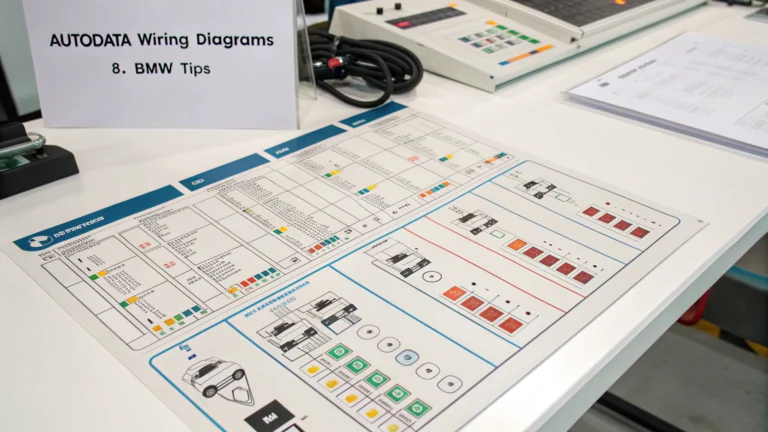
Employ Autodata's interactive wiring diagrams to clearly visualize circuit paths, component placement, fuse positions, and sensor connections. Zoom in, isolate wires, and highlight affected circuits, dramatically simplifying troubleshooting.
Step 4: Follow Guided Fault Diagnostic Procedures
Trust Autodata's guided processes, which methodically outline diagnostic pathways. These pathways address each possible cause logically, systematically eliminating possibilities providing greater precision.
Step 5: Check for Relevant Technical Service Bulletins (TSBs)
Check Autodata's Integrated TSB section before starting major work—this saves time by immediately identifying known issues and solutions documented by vehicle manufacturers.
Step 6: Locate Components and Repair Instructions
Accurately verify the location of problematic components and follow the illustrated replacement and calibration instructions. Autodata clearly highlights correct component installation and torque settings to keep your service standards high.
Step 7: Final Verification and System Reset
Conduct final checks with Autodata-based recommended verification tests. Properly reset or recalibrate systems, reducing return visits and enhancing customer satisfaction.
Common Mistakes to Avoid
Mistakes are common even with experienced professionals. Autodata features help you stay vigilant and avoid these common diagnostic mistakes:
- Guessing instead of diagnosing: Always follow structured fault analysis provided by diagnostic platforms; diagnosing systematically saves resources.
- Disregarding manufacturer TSBs: Ignoring TSBs sometimes leads to unnecessary extensive troubleshooting—take advantage of manufacturer's specific advice.
- Incorrect Wiring Diagram Interpretation: Autodata interactive diagrams simplify correct interpretation, helping eliminate expensive electrical misdiagnosis.
- Neglecting Accurate Torque Specifications: Follow OEM torque values provided by Autodata closely. Overtightening or undertightening critical components may cause catastrophic component failure or warranty voidance.
Advanced Techniques
Experienced technicians benefit from advanced Autodata features for more challenging issues:
- Advanced Diagnostic Pathways: Benefit from advanced-level guided diagnosis that moves beyond just reading DTCs, enabling deeper ECM-based HVAC, suspension, or automatic transmission diagnostics.
- Enhanced CAN Bus Diagnostics: Autodata includes detailed CAN bus diagrams, node locations, and advanced testing procedures to rapidly resolve modern communication breakdowns.
- Professional Calibration Resources: Receive OEM procedures for calibrating sensors, cameras associated with ADAS, throttle bodies, injector coding, and transmission adaptations—critical for accurate repairs on modern technology-laden vehicles.
Tools and Resources Needed
Equip your workshop adequately for efficient diagnostics utilizing Autodata features optimally:
- Professional-grade OBD/Diagnostic Scanner: Reads live data, DTCs, and advanced OEM-specific trouble codes.
- Multimeter & Oscilloscope: For electrical diagnostics and validation of faults reported by Autodata wiring diagrams and fault guides.
- Laptop/Tablet with Internet: Fast access to Autodata through AutoFixData’s intuitive online interface.
- Specialized Test Adapters/Connectors: Optional for certain sensors ECU and CAN bus network diagnostics.
Industry-standard tools combined with AutoFixData's comprehensive Autodata diagnostic features enhance repair accuracy and customer satisfaction.
Real-World Application
To illustrate Autodata's practical use, consider this practical case study from a busy automotive shop:
A Mercedes-Benz C-Class entered the shop with intermittent engine misfires, rough idle, and throttle response issues. Using Autodata features, the technician quickly retrieved DTCs related to fuel management and throttle actuator systems.
Autodata guided diagnostics pinpointed specific wiring anomalies affecting throttle position sensors on the engine harness. Using interactive diagrams, exact locations were rapidly identified, and damaged wiring was clearly located—saving hours of unnecessary teardown. Repair instructions followed from Autodata ensured correct harness routing, sensor replacement, and subsequent relearn procedures, resulting in restored driveability and system integrity swiftly and efficiently.
Conclusion
Equip your automotive shop with the reliable diagnostic insights provided through Autodata features accessible by subscribing to AutoFixData.com. Improved clarity during diagnostics, simplified guided fault-finding techniques, and boosted efficiency are only a click away. Let intuitive Autodata features through AutoFixData help your team eliminate guesswork, avoid unnecessary repairs, improve customer satisfaction, and maintain your business’s competitive edge.
Ready to improve your garage’s diagnostic capabilities today? Check our pricing and subscribe to AutoFixData diagnostic solutions now.
FAQs
1. Can Autodata diagnose every fault?
While Autodata assists significantly, remember it's a resource complementing your professional skills—not replacing them. It greatly simplifies diagnostics by providing structured OEM-based guidance.
2. How frequently is Autodata data updated?
Manufacturers continually update their data—Autodata is dynamically updated, ensuring you always access the latest repair information, specifications, and bulletins.
3. Do I require special training to use Autodata features?
No extensive training is required. Autodata is user-friendly and intuitive, suitable for experienced mechanics and enthusiastic DIY vehicle owners alike.
4. Are Autodata interactive wiring diagrams accurate?
Absolutely—accuracy is a benchmark of Autodata. Diagrams are continuously updated, model-specific, and align exactly with manufacturer wiring diagrams.
5. Is Autodata useful for older vehicles too?
Yes, Autodata includes extensive coverage dating back several decades, providing precise repair guidelines critical for correctly servicing older, more challenging-to-diagnose vehicles.