Is Autodata Suitable for Beginners?
Introduction
For mechanics, garage owners, and automotive enthusiasts alike, diagnosing vehicle issues accurately and quickly can often be a daunting challenge—especially for those who are new to diagnostic tools. When faced with complex electrical faults, emissions issues, or intermittent unusual behavior in vehicles, choosing the right solution can significantly impact your productivity and diagnostic accuracy. As diagnostic resources grow increasingly sophisticated, it's common for beginners to wonder: Is Autodata suitable for beginners?
In this comprehensive guide, we'll delve into why Autodata has become a powerful resource used extensively across garages worldwide, what makes it beginner-friendly, and how you can leverage this tool to troubleshoot effectively and boost your mechanical skillset. We'll explore common diagnostic challenges, provide detailed technical background, outline step-by-step approaches to harnessing the Autodata platform, highlight advanced skills, and suggest complementary tools and resources available through AutoFixData.
Let's dive into why Autodata can indeed be a great starting point for beginners.
Problem Identification
Mechanics today handle a rapidly advancing fleet featuring sophisticated electronic systems, dozens of control modules, increasing hybridization, and more complex emissions regulations. Diagnosing modern vehicles is no longer as straightforward as pulling codes and swapping an occasional O2 sensor. It requires an in-depth understanding of manufacturer-specific diagnostic procedures, precise component locations, wiring schematics, and repair manuals—all readily accessible through diagnostic software.
Consider these diagnostic challenges commonly faced by mechanics:
- Troubleshooting intermittent electrical faults
- Accessing reliable wiring diagrams and repair procedures
- Solving Check Engine Light trouble codes correctly the first time
- Understanding complex automotive systems such as variable valve timing (VVT), emissions control, and modern fuel injection setups
- Saving valuable workshop time without sacrificing diagnostic precision
An industry survey indicated that mechanics waste approximately 30% of their productive hours chasing down issues due to insufficient diagnostic resources or outdated manuals. For beginners still learning their craft, unreliable or confusing diagnostic information amplifies frustration and impacts confidence.
Technical Background
Vehicle diagnostics involve reading trouble codes generated when control module sensors detect anomalies in vehicle performance or emissions control systems. Components such as sensors, actuators, ECU, and wiring must be tested accurately against recommended manufacturers' specifications.
For instance, diagnosing a misfire might require understanding ignition coil function, injector pulse width, crank and cam sensor readings, secondary ignition waveform patterns, and fuel pressure parameters. Without clear guidance, beginners can find themselves overwhelmed or misguided—potentially leading to misdiagnosis, repeated part changes, or unnecessary labor costs.
In other cases, diagnosing complex electrical issues can be significantly simplified when a mechanic has quick access to detailed and manufacturer-specific wiring diagrams clearly showing connector locations, wire colors, pin identifications, and inputs or outputs from individual control modules.
Solution Overview
This is exactly where diagnostic tools like Autodata, available readily through the trusted AutoFixData platform, become invaluable. Autodata has rapidly become one of the industry-leading diagnostic software choices that mechanics turn toward regularly to gain comprehensive access to manufacturers' specific technical information.
Some of the core features that make Autodata particularly beginner-friendly include:
- Clearly structured and intuitive interface
- Fast access to wiring diagrams, fuse box layouts, and component locations
- Manufacturer-approved procedures for repairs and troubleshooting
- Concise step-by-step diagnostic guidance for fault codes
- Maintenance schedules and servicing instructions
- Precise specifications and data sheets for torque settings, fluid capacities, and lubricant grades
At AutoFixData, accessing such high-quality automotive information is simple, streamlined, and affordably priced.
Step-by-Step Process
When using Autodata as a beginner, here's a systematic approach to troubleshooting efficiently:
Step 1 – Vehicle Identification
- Enter the vehicle details accurately (year, make, model, engine variant). Proper identification ensures you're accessing the correct data.
Step 2 – Fault Code Retrieval & Interpretation
- Use a quality OBD-II scanner or diagnostic tool to retrieve your vehicle's trouble codes (DTCs).
- Input the codes in Autodata to get detailed explanations of possible faults and diagnostic advice.
Step 3 – Review Wiring Diagrams and Component Locations
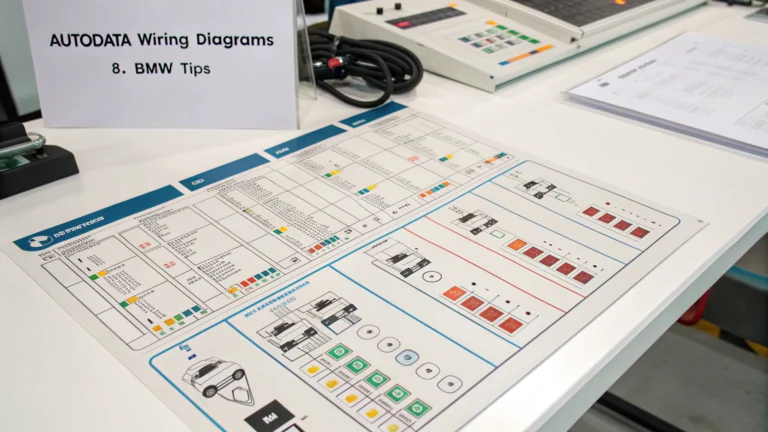
- Autodata diagrams clearly illustrate circuit layouts. Identify connector points, fuse locations, modules, grounds, and relays relevant to your issue.
Step 4 – Component Testing Advice
- Follow the suggested testing procedures provided by Autodata. Specific component measurement specifications (e.g., voltages, resistance measurements) guide beginners efficiently.
Step 5 – Repair or Replace
- With test results, decide if repairs or replacements are necessary. Autodata provides procedures ensuring parts are securely installed as per manufacturer's guidelines.
Step 6 – Clearing Codes and Validation
- Clear fault codes after completing repairs. Conduct road-tests to confirm if issues resolved, confirming with live sensor data provided by your diagnostic tools.
Common Mistakes to Avoid
Mechanics new to diagnostic procedures frequently commit these mistakes:
- Skipping accurate vehicle identification: Misidentifying vehicles can lead to referencing incorrect wiring diagrams or repair procedures.
- Overlooking detailed inspection notes: Beginners often rush into expensive component replacement before thoroughly inspecting wiring or connector conditions first.
- Ignoring manufacturer diagnostic sequences: Always follow step-by-step diagnostics to avoid skipping critical measurement steps.
- Neglecting proper documentation: Logging diagnostic steps meticulously prevents unnecessary repetition of tests.
Advanced Techniques
While Autodata for beginners simplifies introductory diagnostics immensely, professional mechanics significantly benefit from advanced features such as:
- ECU wiring harness verification methods: Using Autodata's specific continuity tests.
- Oscilloscope waveform comparisons: Autodata frequently provides ideal sensor waveform outlines for detailed signal analysis.
- Pinpoint testing for intermittent faults: Utilizing detailed circuit breakdowns to monitor voltage drops, amperage fluctuations, or resistance anomalies.
- Integrated Scheduled Maintenance: Proactive service scheduling, fluid capacities, and manufacturer recommendations reduce common long-term problems.
Tools and Resources Needed
Beginners setting themselves up for efficient diagnosis with Autodata should invest in basic but essential tools including:
- Reliable OBD-II diagnostic scanner (preferably enhanced vehicle coverage)
- Multimeter for electrical circuit testing
- Basic automotive oscilloscope (for advanced testing)
- Manufacturer-specific specialty tools for precise measurement tasks
- Access to comprehensive automotive data subscription platforms like AutoFixData (featuring Autodata, AllData, HaynesPro)
Real-World Application
Consider a recent real-world example of a Volkswagen Golf MK7 presenting intermittent electrical faults, causing sporadic engine stalls. A novice mechanic initially feared troubleshooting the complex wiring diagram would overwhelm them. However, through accessing Autodata via AutoFixData, the technician easily located the ECU harness connectors, pinpointed circuit voltage drop points, and quickly identified corrosion at a critical ground point beneath the battery tray. Armed with precise diagrams, guided testing procedures, and precise component locations, the beginner resolved the problem accurately in record time—highlighting precisely why Autodata is indeed suitable for beginners.
Conclusion
In conclusion, Autodata is not only suitable for beginners but an essential foundational tool for effectively building automotive diagnostic expertise. With clear instructions, concise diagrams, manufacturer-approved troubleshooting sequences, and professional-level resources accessible through AutoFixData, beginners avoid troubleshooting headaches while significantly improving accuracy and productivity.
Ready to streamline your diagnostics and repairs? Start your journey today with trustworthy Autodata subscription offers at AutoFixData pricing.
FAQs
Q1: Is Autodata suitable for beginners who have minimal automotive knowledge?
A: Absolutely. Autodata’s structured format, clear instructions, and easy-to-navigate diagrams simplify complex diagnostics even if you're relatively inexperienced.
Q2: How does Autodata differ specifically from other resources like HaynesPro or AllData?
A: Autodata excels particularly in clarity of wiring diagrams, ease of access to component locations, routine maintenance schedules, and precise specification listings—ideal for quick beginner referencing.
Q3: Can Autodata help with advanced electronics or hybrid/electric diagnostics?
A: Yes. Autodata provides detailed manufacturer-specific protocols for hybrid, electric vehicles, and advanced electronics systems with clear troubleshooting steps suitable for all experience levels.
Q4: Does AutoFixData offer Autodata functionality individually or bundled with other tools?
A: AutoFixData provides flexible subscription options including both individual Autodata platform subscriptions and bundled plans combining Autodata, AllData, and HaynesPro for comprehensive automotive diagnostics.
Q5: Is Autodata regularly updated by AutoFixData?
A: Absolutely. AutoFixData ensures the version of Autodata you access remains fully current, reliable, and manufacturer-approved, protecting you from outdated information or diagnostic confusion.
Drive your diagnostics confidently—explore how AutoFixData can enhance your mechanical knowledge today.