Preparing for MOT with Autodata: Essential Steps for Mechanics and Technicians
Every year in the UK, thousands of vehicles fail the MOT test due to preventable faults, often caused by incomplete or inaccurate diagnostics. As any seasoned mechanic understands, preparation is critical—and leveraging accurate diagnostic resources ensures these issues are avoided. One challenge continually faced by garages and professionals reviewing vehicles for MOT compliance is sourcing detailed, accurate technical data and repair guidelines. Incorporating Autodata MOT guidelines into your diagnostic and servicing workflows not only ensures MOT compliance but also drastically cuts preparation time and increases efficiency. With platforms like AutoFixData.com, technicians gain trusted access to Autodata, empowering them with reliable diagnostic solutions to pass MOT standards effectively first time, every time.
In this comprehensive guide, we'll explore how integrating Autodata MOT diagnostics into your daily routine can transform your MOT preparation and testing process—simplifying complex troubleshooting tasks and maintaining high service standards in your workshop.
Problem Identification: Understanding Common MOT Diagnostic Challenges
Every mechanic faces the ongoing challenge of identifying, diagnosing, and resolving vehicle issues efficiently. According to DVSA reports, around 30% of vehicles routinely fail their MOT test initially due to emissions irregularities, suspension component failures, worn braking elements, lighting issues, or tyre conditions. Often, these failures stem from missed routine maintenance or failure to accurately diagnose hidden underlying issues.
Garages without access to reputable diagnostic platforms often guess or trial-and-error their way through, wasting time, increasing overhead costs, and disappointing customers. Finding critical technical data quickly becomes burdensome when not effectively utilizing digital platforms like Autodata MOT guidelines. Relying on broad diagnostic guesswork instead of precise vehicle-specific troubleshooting steps increases MOT failure rates, customer dissatisfaction, and impacts profitability.
Technical Background: Essential MOT Criteria and Inspection Areas
To prepare effectively using the Autodata MOT resources, mechanics must first clearly understand the essentials of MOT testing. The MOT (Ministry of Transport) test assesses vehicle roadworthiness focusing primarily upon safety, emissions compliance, and environmental standards. Key areas evaluated during MOT testing include:
- Vehicle emissions systems (CO₂, HC, NOx readings)
- Brake and suspension components (braking effectiveness, fluid leaks, condition of shock absorbers, coil springs, etc.)
- Lighting and signaling devices (headlamp alignment, bulb function, electrical faults)
- Tyre conditions (tread depth, structural integrity)
- Body structure and corrosion (chassis integrity, rust damage assessment)
- Exhaust system conditions (leaks, emissions output, catalytic conversion functionality)
- Steering systems (play or looseness evaluation, leaks, functionality)
An accurate and systematic approach to assessing these critical aspects using Autodata MOT resources significantly reduces guesswork and supports quicker problem-solving.
Solution Overview: Autodata MOT as Your Diagnostic Partner
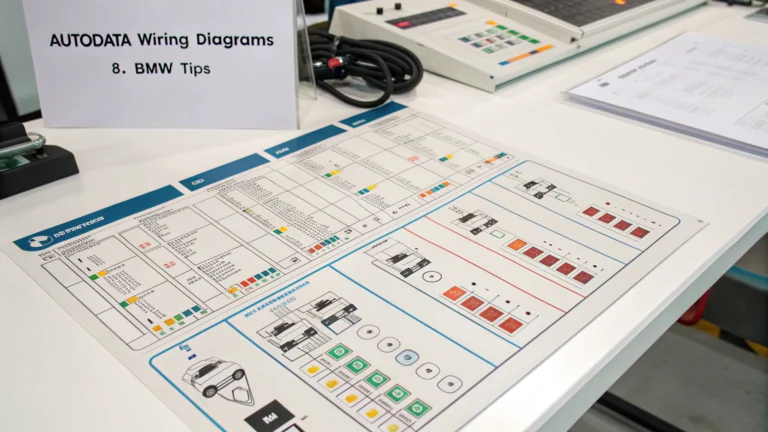
When preparing vehicles for their MOT tests, data accuracy and ease of access are paramount. Diagnostic platforms such as Autodata, offered through AutoFixData, dramatically simplify accessing the critical, vehicle-specific technical service data you require. Autodata offers extensive troubleshooting guides, wiring diagrams, precise service schedules, fluid recommendations, and manufacturer-specific technical bulletins—each essential to a successful MOT inspection.
Some key Autodata features helping mechanics during MOT preparation include:
- Manufacturers’ specific diagnostic trouble code (DTC) identification and resolution steps
- Step-by-step troubleshooting guides for complex electrical, emissions, and sensor issues
- Precise maintenance schedules from leading automotive brands
- Detailed vehicle schematics and component location diagrams
- Accurate torque specifications and recommended tyre pressures
With these powerful resources provided by AutoFixData’s Autodata platform, mechanics can target their preparation and diagnosis much faster, resulting in increased MOT pass rates, improved service turnaround, and enhanced customer satisfaction.
Step-by-Step Process: Utilizing Autodata MOT to Prepare Vehicles Efficiently
Step 1: Initial Vehicle Assessment and Data Retrieval
Begin by inputting the exact make, model, and year of the vehicle into Autodata's fast-search interface. Immediately access comprehensive MOT technical data such as emissions figures, brake test thresholds, standard tyre pressures, permissible wear limits, and service intervals.
Step 2: Diagnostic Trouble Codes (DTCs) Scan
Use diagnostic equipment compatible with Autodata to scan the vehicle’s OBD-II port. Autodata precisely outlines all relevant trouble codes along with actionable steps for quick resolution.
Step 3: Prioritize MOT-Critical Areas
Specifically focus diagnostics on frequent points of MOT failure: brakes, suspension, tyres, lighting, and emissions systems. Autodata MOT guidelines clearly highlight these points and provide manufacturer-approved service and inspection procedures.
Step 4: Verify Emissions & Component Readiness
Cross-reference vehicle data displayed with Autodata’s expected values for CO₂, HC, NOx emissions, and catalytic converter efficiency. Autodata's precise diagnostic procedures simplify hunting down emissions irregularities, often hidden in sensor faults or minor leaks.
Step 5: Follow Manufacturer’s Recommended Service Procedures
Using Autodata’s structured maintenance checklists, carry out wheel-alignment procedures, headlight alignment checks, fluid checks, brake service routines, and inspection of suspension components.
(Suggested visual insertion: screenshots demonstrating Autodata precise step-by-step diagnostic flow.)
Common Mistakes to Avoid: Maximize MOT Success
- Ignoring Pre-Test Checks: Mechanics occasionally skip routine Autodata-recommended pre-inspection checks, missing critical minor issues which later lead to MOT failures.
- Misinterpreting Fault Codes: Inaccurate interpretations or rushed reading of DTCs—Autodata’s clear code explanations are readily available, eliminating ambiguity.
- Overlooking Manufacturer Service Intervals: Regular maintenance intervals are explicitly outlined in Autodata. Not following them can lead to unexpected wear causing preventable faults.
Consistently following Autodata MOT guidelines eliminates these costly errors, reduces avoidable MOT failures, and improves workshop productivity.
Advanced Techniques: Professional Insights for Expert Mechanics
Experienced mechanics often delve deeply into Autodata’s wealth of OEM-specific technical bulletins (TSBs) and updates. Checking for technical bulletins helps quickly identify manufacturer-known vehicle-specific faults that often impact MOT pass rates. Additionally, Autodata provides sophisticated wiring diagrams and fault-trace routines helpful when encountering intermittent faults or complicated electrical issues affecting MOT-critical systems.
Tech tip: Regularly reviewing TSBs through AutoFixData ensures you stay ahead, proactively resolving faults before customer vehicles even enter MOT testing.
Tools and Resources Needed: Essential Diagnostic Equipment
To efficiently apply Autodata MOT guidelines, you’ll need:
- Professional-grade automotive scan tools (OBD-II equipment)
- Exhaust Gas Analyzer for emissions diagnostics
- Headlight alignment tester
- Brake tester (rolling-road or equivalent)
- Suspension play detector/analyzer
- Torque wrenches, tyre tread depth gauges, and multimeters
These diagnostic tools, when combined with Autodata’s detailed technical data accessible via AutoFixData, form a complete diagnostic and maintenance system ideal for streamlining MOT preparation.
Real-World Application: Case Study
A local garage previously struggled with inconsistent MOT pass rates. Incorporating AutoFixData’s access to Autodata technical information, their technicians quickly identified frequent emissions failures stemming from incorrectly calibrated lambda sensors. After viewing Autodata’s detailed troubleshooting procedures and specifications, sensor recalibration became straightforward. As a result, MOT pass rates increased by over 25% within two months, enhancing profitability and customer loyalty.
Conclusion: Streamline MOT Diagnostic Workflows with Autodata
Preparing accurately and efficiently for MOT tests doesn't have to be a struggle. Implementing Autodata MOT guidelines directly from AutoFixData dramatically improves problem-solving efficiency. Mechanics empowered with instantly accessible, accurate technical data ensure superior diagnostics accuracy, reduce failure rates, improve customer satisfaction, and boost profitability in a competitive automotive landscape.
Explore our pricing plans today to effectively integrate Autodata into your MOT preparations and diagnostics routines.
Get started today—View AutoFixData Pricing Plans
FAQs
What’s the greatest advantage of using Autodata for MOT testing preparation?
Using Autodata MOT ensures that exact manufacturer data is quickly accessible, significantly reducing guesswork and incorrect diagnostics.
Can Autodata address vehicle-specific electrical problems affecting MOT compliance?
Absolutely—Autodata contains comprehensive wiring schematics and electrical fault-trace routines invaluable to diagnosing MOT-critical electrical issues.
Is Autodata accessible to independent workshops as easily as main dealerships?
Yes. With AutoFixData’s subscription, independent garages have affordable, straightforward access identical to large dealer service departments.
How up-to-date is Autodata’s MOT information?
Autodata is constantly updated, featuring the latest data directly from manufacturers, keeping you ahead of technical updates.
With AutoFixData and Autodata MOT solutions working together, you’re equipped with professional-grade diagnostics to ensure every MOT test runs smoothly.