Introduction
Every experienced mechanic has been there: you're deep into diagnosing a vehicle that's fighting your every effort and you suddenly run into conflicting wiring diagrams, ambiguous diagnostic trouble codes (DTCs), or outdated service bulletins. In such moments, accuracy, clarity, and trusted technical assistance become crucial lifelines. This is exactly where knowing how to effectively communicate with Autodata support can significantly streamline your repairs.
Autodata, among other key platforms like AllData and HaynesPro, offers detailed OEM-specific automotive repair data crucial to quickly solving technical automotive issues. Yet, understanding how to swiftly and effectively leverage Autodata support can shave hours off your diagnosis and help maintain workshop profitability. At AutoFixData, we integrate cutting-edge diagnostic platforms—including Autodata—to provide mechanics with accurate service data at their fingertips, optimized to smoothen your workflow.
Problem Identification
Across all automotive workshops, diagnosis remains one of the most time-consuming aspects of vehicle repair. According to recent statistics, diagnostic inefficiencies can account for up to 40% of a workshop's reduced productivity. Common diagnostic challenges include:
- Difficulty interpreting schematics and wiring diagrams
- Misinterpretation of fault codes and troubleshooting procedures
- Outdated information leading to extended repair times
- Ambiguous or incomplete manufacturer service bulletins
When faced with these hurdles, the inability to quickly access or sufficiently interpret repair data through Autodata typically leads to longer repair timelines, customer dissatisfaction, and ultimately, reduced profitability.
It's essential to understand how to quickly validate or clarify technical information by efficiently contacting Autodata support when needed.
Technical Background
Let's briefly revisit why accurate diagnostic data matters so much in automotive repair. Today’s vehicles are far more advanced and electronically integrated than models from even a decade ago. Complex control modules manage everything—from engine performance, emissions systems, and ABS brakes, to transmission shifting, adaptive suspensions, and ADAS functionality.
To repair and maintain these sophisticated systems, technicians rely heavily on digital service information systems, such as Autodata, for essential OEM-based details like:
- Circuit diagrams for pinpointing wiring issues
- Fault code symptom lists and recommended repair procedures
- Manufacturer recalls, technical bulletins, and software updates
- Step-by-step guides for complex repair procedures, including torque specs, sequences, and specialized tool requirements
Given the abundance of data provided, sometimes questions arise requiring clarification or further technical assistance directly from Autodata support.
Solution Overview
To address diagnostic uncertainties promptly, mechanics and garage owners frequently contact Autodata support. Autodata’s support technicians offer additional clarification, updated information, or problem-solving assistance on complex diagnostic scenarios.
AutoFixData grants access to Autodata and similar powerful diagnostic platforms like AllData and HaynesPro—ensuring mechanics have quick access to critical OEM-level information. Moreover, knowing exactly when and how to leverage Autodata support maximizes productivity.
Some key Autodata support advantages include:
- Clarifications on ambiguous wiring diagrams or schematics
- Updated service bulletins clarification, beyond the published material
- Help defining correct fault code diagnostic pathways
- Assistance verifying torque values or identifying conflicting information
Understanding the right approach to contacting Autodata support for quick answers establishes smoother, more precise repairs.
Step-by-Step Process to Effectively Contact Autodata Technical Support
Follow this structured process for effectively using Autodata support, streamlining your diagnostic workflow:
Step 1: Ensure Necessary Information is at Hand
Have specific vehicle information immediately available:
- Make, model, year, VIN
- Engine types, codes, exact software revisions (if ECM-related)
- Clearly identified symptom(s), diagnostic trouble codes (DTC), and repairs already attempted (with notes on previous diagnostics)
Expert Tip: Organize your initial findings clearly to efficiently communicate precise concerns to the Autodata support tech.
Step 2: Clearly Reference Autodata Platform Content
Always reference the exact diagrams, page numbers, or bulletin titles/numbers when contacting Autodata support. Clearly explaining your confusion or conflicting data saves significant diagnostic time. This helps the tech locate, verify, and respond more rapidly.
Step 3: Plan Your Queries Being Specific
Make the question or diagnostic confusion precise. Instead of a vague "the wiring diagram does not match," specify exact connectors, pin color differences, discrepancies between noted fuse references, or missing symbols.
Step 4: Utilize Autodata’s Online Support Systems
Autodata typically offers direct email support or online forms. Within the AutoFixData portal, accessing Autodata is streamlined, giving you rapid communication routes to request help quickly.
Step 5: Follow Up & Documentation
Clearly document Autodata support’s feedback, ensure corrections are archived, and update workshop staff to maintain consistency and eliminate confusion if similar cases arise.
Common Mistakes to Avoid
Not Providing Adequate Details Initially
Autodata support personnel can only help effectively with well-documented details. Provide as much explicit information as possible from the outset to save valuable diagnostic time.
Overlooking Bulletins and Updates
Before contacting support, always ensure you’ve reviewed current technical bulletins and recent software updates. Problems may already have been addressed.
Failure to Reference Autodata’s Specific Information Clearly
Identify precisely the page number, diagram identifier, trouble code reference index—vague references delay your solution.
Relying Solely on Phone Conversations Without Written Documentation
Written responses or emailed documentation ensure you have official references for future issues and training purposes.
Advanced Techniques for Using Autodata Support
To further streamline your workshop’s efficiency with Autodata, consider adopting these advanced best practices:
Utilize Screenshots or Photos When Communicating
Attach screenshots directly from Autodata, illustrating precisely the confusion or issue clearly and quickly.
Build a Local Knowledge Base
Use Autodata support responses consistently to build a localized knowledge base. Note the solutions to prevent repeating inquiries for recurrent issues.
Schedule Periodic Technical Reviews
Regularly review known Autodata updates and technical bulletins within the workshop team. Clearer understanding means fewer calls for support clarification.
Tools and Resources Needed
When interacting effectively with Autodata support teams, workshop technicians benefit significantly from tools and resources like:
- A workshop subscription platform to Autodata integrated portals like AutoFixData.com
- Tablet or touchscreen systems for rapid referencing and screen capturing
- Quality internet-connected devices for real-time support interaction
- Clear and documented notes on prior repairs and diagnostic attempts
Solutions like AutoFixData particularly enhance workshop efficiency by instantly accessing all popular platforms—from AllData, Autodata, and HaynesPro—in a single place.
Real-World Application & Case Study Example
Let’s briefly examine a real-world example demonstrating the value of contacting Autodata support:
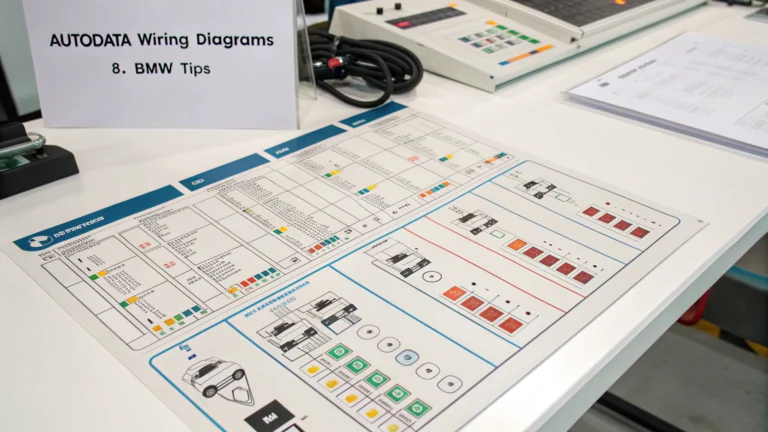
A BMW specialist garage encountered conflicting wiring information for an E90 BMW 3-Series airbag system. Despite careful evaluation, wiring references in their Autodata diagrams and on-vehicle wiring appeared mismatched, adding diagnostic uncertainty. Quickly contacting Autodata support—with clearly documented VIN, diagrams, connector IDs—resulted in confirmation of an OEM revision which hadn’t yet been widely documented.
This fast Autodata technical clarification saved hours of unnecessary vehicle downtime, clearly showcasing how contacting Autodata support through AutoFixData streamlined the diagnostic process.
Conclusion
Successfully contacting Autodata support ensures your shop quickly navigates diagnostic uncertainties, ultimately saving valuable diagnostic time and improving your coworker’s diagnostic accuracy. Remember, carefully organized and clearly documented queries result in quicker resolutions.
At AutoFixData.com, we give technicians integrated access to reliable diagnostic platforms like AllData, HaynesPro, and of course, Autodata. Using these resources and efficiently leveraging Autodata support guarantees maximum diagnostic productivity and profitability.
Ready to streamline your diagnostic processes today?
Explore our range of service plans, tailored to your workshop’s unique needs, at AutoFixData Pricing.
FAQs
How quickly does Autodata support typically respond?
Most queries submitted via their online support system receive responses within 24 to 48 hours. Providing complete details accelerates processing.
Does Autodata offer live phone support?
Typically, Autodata provides online and email-based technical support, allowing them to efficiently handle numerous inquiries.
If Autodata wiring diagrams differ from the vehicle, what should I do?
Immediately contact Autodata support with VIN and diagram references. Errors or updates are clarified quickly by their technicians.
Are Autodata support queries chargeable separately?
Support services are typically included within your subscription. Check your AutoFixData subscription options for details.
Can Autodata assist with advanced scan tool queries?
Autodata focuses primarily on OEM service data. For scan-tool-specific queries, consult your scan tool vendor support directly; however, Autodata can clarify fault code definitions and diagnosis pathways effectively.